
American Tourist Visa and Visa Bonds
Whether you travel to the United States for business, tourism, or a family visit, you likely need to obtain a temporary visitor visa. Quite a few visitors apply for a B-1 or B-2 visa without fully understanding the rules and limitations of this visa type. Plus, with visa bonds becoming increasingly relevant, travelers may wonder if they’ll be required to pay a visa bond before entering the country.
At Jorge Munoz Law Firm, we help applicants understand their American tourist visa options, visa requirements, and application procedures. We also provide guidance on visa bond policies that may affect certain travelers. Call us at 786-678-8587 to schedule a consultation with a visa lawyer now.
Table of Contents
Let Jorge Munoz Law Firm Guide You Through the Immigration Process!

In-Depth Legal Knowledge

Comprehensive Advice and Representation

Excellence In Customer
Service

Successful Results
Understanding the American Tourist Visa
The term “American tourist visa” typically refers to the B-1/B-2 nonimmigrant visas. Foreign nationals can temporarily enter the United States on a B-1 or B-2 visa for certain business or tourism activities. These visas are intended for temporary visits. Applicants must show that they plan to return to their home country after their authorized stay ends.
An American tourist visa may be granted for:
- Tourism and vacation travel
- Visiting friends or family
- Going to business meetings
- Attending conferences
- Receiving certain types of medical treatment
- Negotiating contracts
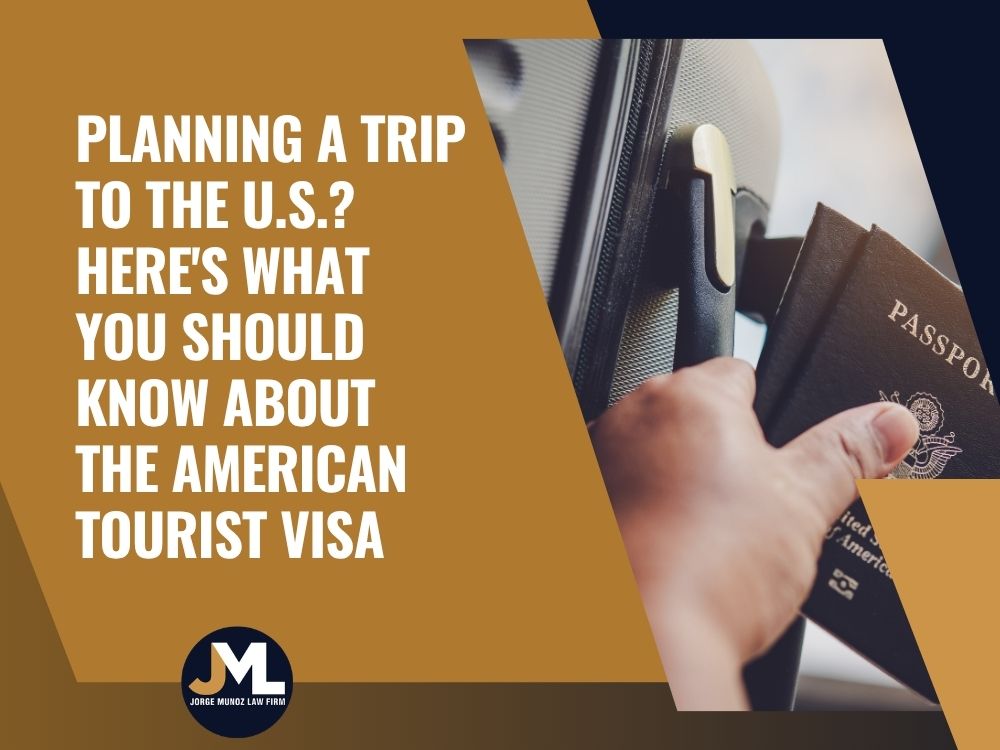
While you may be granted a B visa for business purposes, you can’t use this type of visa for long-term employment, permanent relocation, or unapproved study programs.
Immigration officers review these visa applications carefully, so failing to provide accurate or thorough information can delay or complicate your application process.
B-1 vs B-2 Visa: What’s the Difference?
People interested in visiting the U.S. are often curious about the differences between a B-1 vs. B-2 visa. While they fall under the same general category, they serve different purposes.
B-1 visas are approved for business activities:
- Attending meetings
- Consulting with business associates
- Going to professional events
- Contract negotiation
B-2 visas are intended for personal travel, such as:
- Vacations
- Family visits
- Tourism activities
- Medical treatment
- Social events
Applicants may receive a combined B-1/B-2 visa that allows them to engage in business and tourism activities while in the United States.
Understanding the permitted activities under each visa category is important because violating visa terms may affect future immigration benefits or visa applications.
Need Help Applying for a B-1/B-2 Tourist Visa?
How Long Can I Stay in the U.S. on Tourist Visa Status?
This is a common question for visitors who want to preserve their ability to immigrate in the future. The answer ultimately comes down to the period of admission granted by Customs and Border Protection (CBP). Visitors are often allowed to stay for up to six months, but shorter stays may also be approved.
Overstaying on an American tourist visa can lead to serious immigration consequences, including visa cancellation, future visa denials, unlawful presence bars, detention in an ICE facility, and removal proceedings.
Visitors may be allowed to request an extension of stay, but approval is discretionary and not guaranteed.
U.S. Visa Bond Program Details
The U.S. Department of State publishes information on countries subject to paying visa bonds to immigration before being granted a B-1 or B-2 visa. Visa bonds immigration policies are often linked to countries with high rates of visa overstays.
U.S. Tourist Visa Bond Requirement Explained
American tourist visa holders from certain countries must familiarize themselves with U.S. visa bond program details. In some situations, the government may require individuals to deposit a monetary bond before receiving a visa.
Examples of countries subject to the U.S. tourist visa bond requirement in 2026 may include Botswana, Mongolia, Kyrgyz Republic, Turkmenistan, and Venezuela. The Department of State also provides information about when visa bond requirements roll out.
Visa bonds vary in amount, and visitors may be ordered to pay up to $5,000, $10,000, or $15,000.
Once the visitor complies with the terms of their visa and exits the country on time, the bond can be refunded. Should they overstay their visa or violate the terms, the government will keep the deposit.
Immigration policies in this area change frequently, so it’s important to work with a visa attorney who can help you understand what you need to do to enter the country.
Common Reasons Your American Tourist Visa Was Denied
American tourist visas are denied for a variety of reasons. Immigration officers may believe that a visitor intends to stay in the United States after their visa expires, often due to insufficient financial evidence, weak ties to their home country, a history of immigration violations, inconsistencies in their application, or a failure to explain the purpose of their travel.
Even minor mistakes or inconsistencies in your application or documentation may cause immigration officers to flag your application.
How an Immigration Lawyer Can Help With American Tourist Visas
If you’re applying for an American tourist visa, working with an immigration lawyer can help you submit the strongest application possible and address potential concerns before you file. At Jorge Munoz Law Firm, we assist with preparing applications, submitting supporting documentation, explaining visa limitations, determining whether you need a B-1 vs. B-2 visa, addressing past immigration issues, assisting with U.S. tourist visa bond requirements, and exploring your options if your visa application is denied.
Wherever you are in the process, we’re here to help. Call us at 786-678-8587 or request a consultation online.
